
 ← All work

ADDA · Interior Design Studio
A strong studionobody knew about.
ADDA had a talented team capable of excellent interiors, and almost no clients. The problem was not the product. The market did not know the brand.
The Challenge
Great work.
No recognition.
ADDA was a young studio: new to the market, with no portfolio of finished projects to show as proof. The category did not help. Interior studios talked to the market in almost the same way:
The work looked polished, but the advertising gave no reason to remember one studio over another. In a category like this, the advantage goes to those who have been around longer and have the stronger reputation and word of mouth. ADDA had neither.
Research
Facts first.
Ideas second.
We did not ask what the advertising should look like. We asked why a talented studio was not getting orders. We studied the market, the competitors, brand awareness and the way people actually choose an interior studio. What follows is what we found, not an academic study.
01
Everyone looked good.
Everyone looked the same.
We reviewed the communication of the six most visible studios and surveyed market players. The formula was the same everywhere. The work was polished, but the brands were hard to tell apart, and the market relied on familiarity and recommendations.
02
A good studio nobody could name.
14.7%
We surveyed 306 people from the target audience. 122 of them, almost 40%, could not name a single interior studio. Among the other 184, nobody came up with ADDA on their own. When the brand was named in a list, 27 people recognised it. ADDA ranked fifth of seven.
03
People were not afraid of design.
They were afraid of paying for the invisible.
Interior design has an unusual sales problem: the client is asked to decide before the result exists. So a studio is chosen on trust. In what we found, portfolio and awareness come first. For the client the portfolio is not a showcase but evidence that lowers the risk. ADDA did not have one yet.
04
The money and the decision were not in the same hands.
ADDA assumed its core was wealthy men, and the data agreed: in 632 contracts between developers and apartment buyers, 72.9% were signed by men. But when we looked at how a studio is actually chosen, the picture changed. In 85% of couples the renovation is decided together, and the roles are split: men focus on budget and materials, women on aesthetics, style and how the finished home will feel.
Men: what decides
Women: what decides
The money more often comes from the man. But who gets the house is more often decided by the woman.
The Conclusion
Three barriers.
One roadmap.
So the strategy had two jobs: make ADDA known, and win real projects that would become proof. And an order to do them in:
The first job was not to sell.
It was to get noticed.
Before people could consider ADDA, they had to remember ADDA.
Act 1 · Get noticed
Time to get busy with the interior.
Another beautiful photograph of a room would not have helped anyone. We needed communication that could not be mistaken for someone else’s.
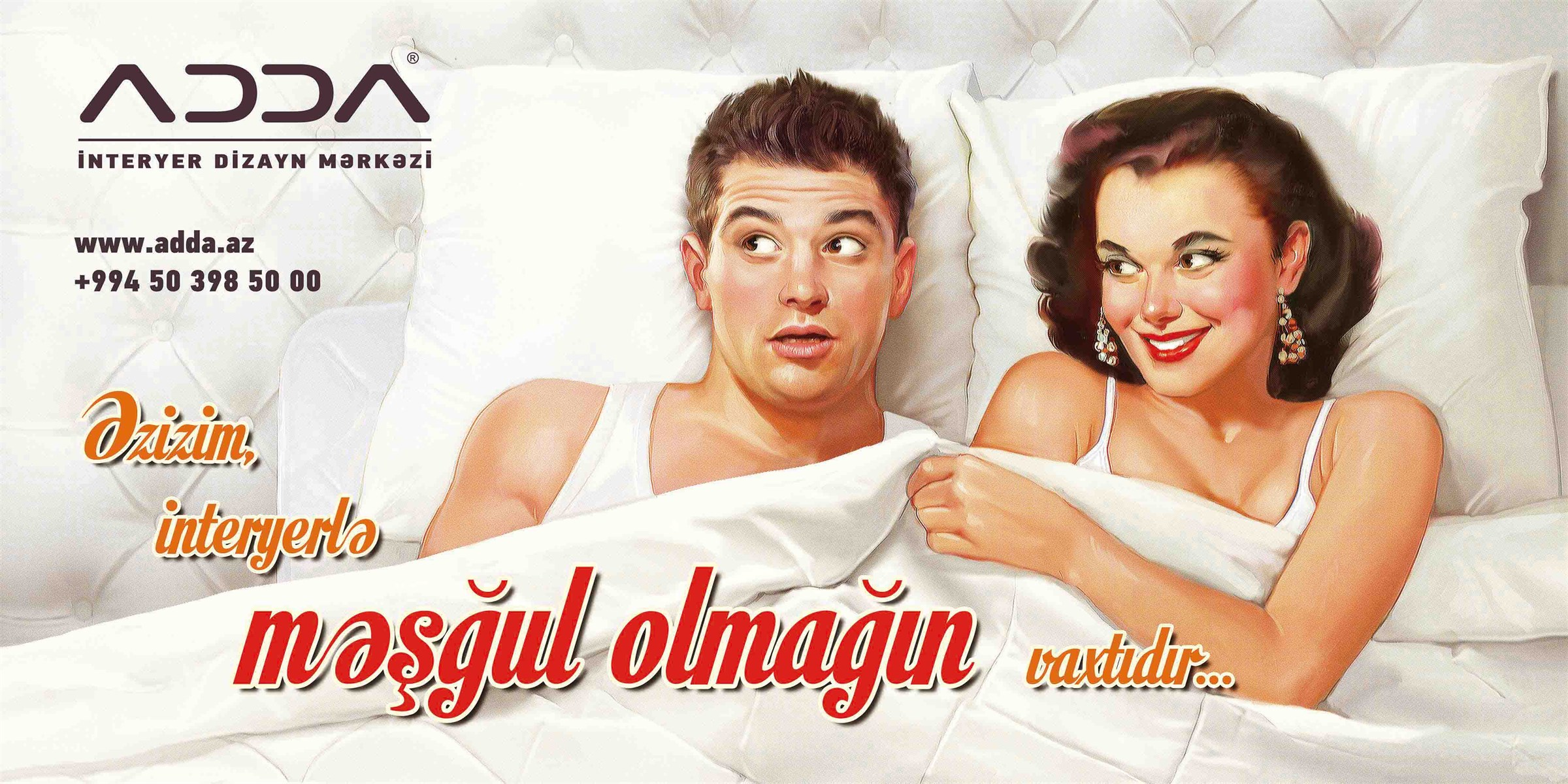
The idea. We started with a simple domestic truth: interior decisions are discussed at home, between husband and wife. So we asked: when does that conversation actually happen? The scene almost wrote itself.
“Darling, isn’t it time we got busy… with the interior?”
The Mechanic
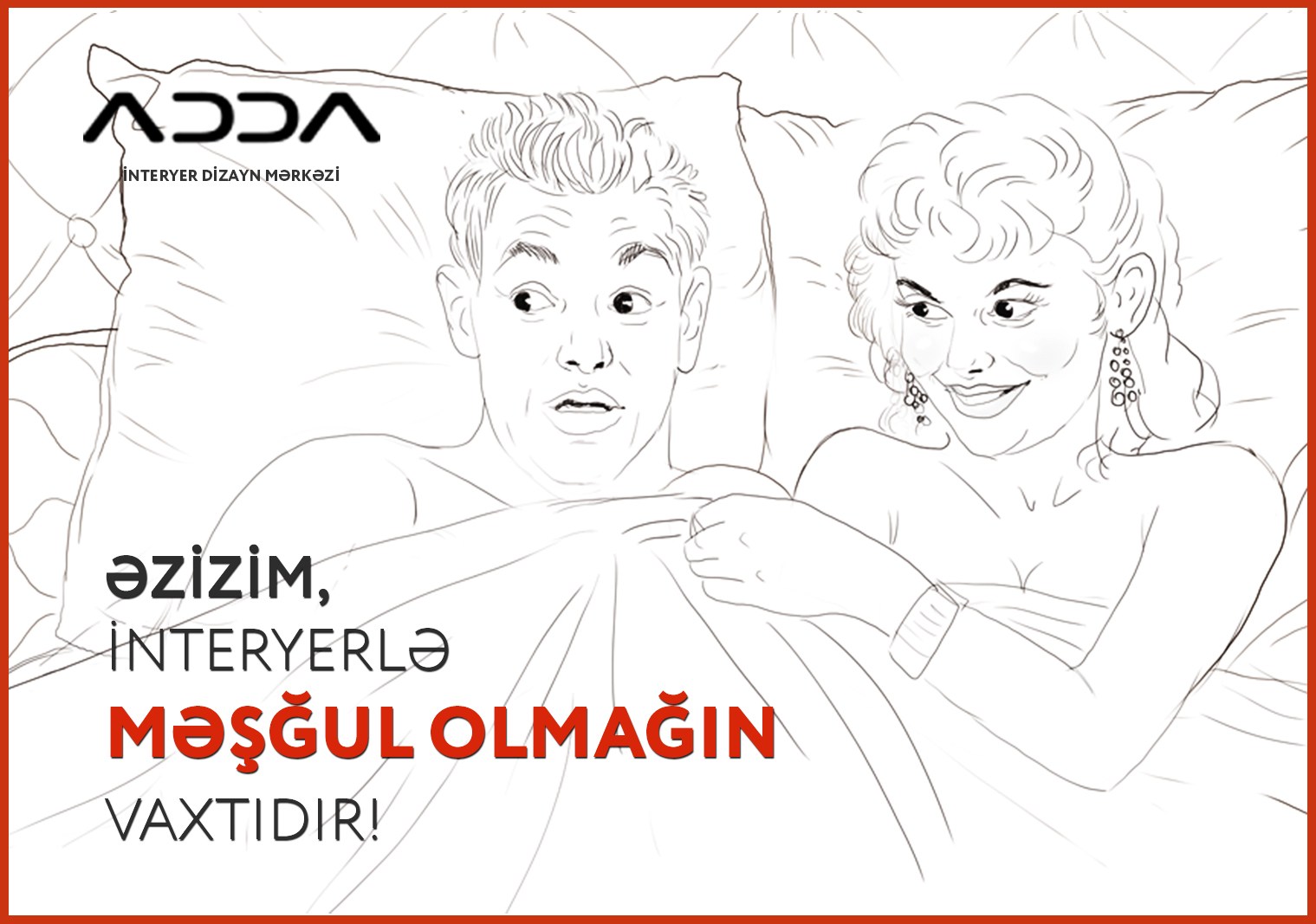
From the sketch
The slogan was a call to action, and we made it dominant. We enlarged the words “məşğul olmağın”. In Azerbaijani they mean both “to get on with something” and something else entirely. From a distance, people saw a couple in bed and a huge call to get busy. Only up close did the rest of the sentence appear. In a market full of elegant rooms and polite branding, ADDA suddenly sounded like nobody else. The provocation was not for shock: it was a device that stops the eye and makes people read on.
The image. The heroine was a woman, because the woman was the one who influenced the choice. But ordinary fashion photography was out at once: it pulled the associations towards perfume and fashion. We broke that template and drew the couple in 1950s pin-up style: vintage, bright, funny, with the character of a brand.
Act 1 · The reaction
The campaign people started talking about.
The reaction went beyond what we expected. The visual triggered arguments, outrage and plenty of discussion. People shared it, criticised it and argued whether it had gone too far. Every new argument carried the campaign further. The people most offended by it became some of its best distributors. Reach stopped depending only on paid placements.
The original

The replacement
A brand almost nobody knew
was suddenly at the centre of the city’s conversation.
ADDA now had what it lacked most at the start: attention.
Act 2 · Earn trust
Now people were ready to listen.
Once the brand was visible, there was no point in shouting louder. The next barrier was completely different. Potential clients already knew ADDA and asked themselves: “What if I pay for the design and don’t like it?” The second phase of communication was deliberately calmer. The brand no longer had to fight for attention at any cost. It could make a direct offer.
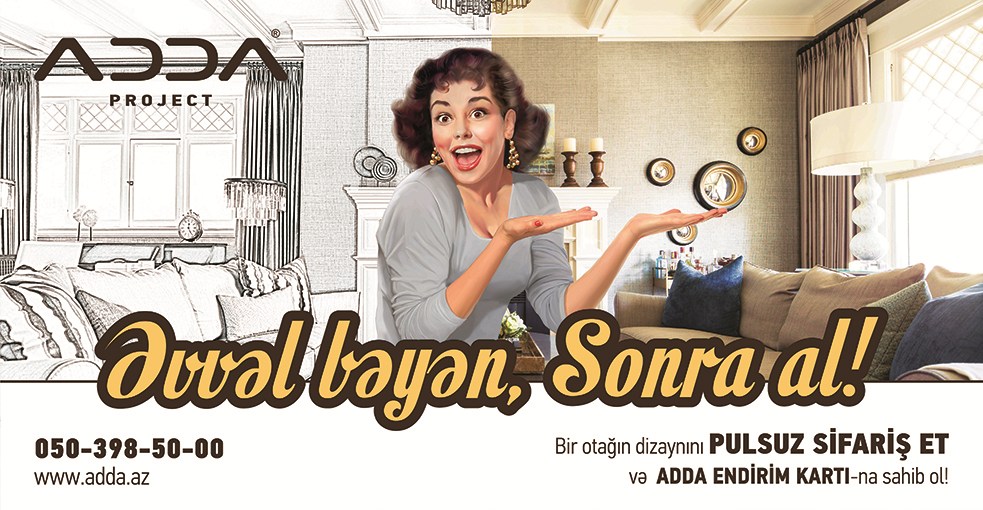
Əvvəl bəyən, sonra al — Like it first. Buy it after.
ADDA designed one room for the client before asking for a commitment to the full project.
Don’t sell the promise. Show the result.
The sale turned into a product demonstration. Not a PDF, not a manager’s talk, not “look at our portfolio”. The client saw their own home, transformed, on a large screen. The conversation changed.
“Pay us and trust that the result will be good.”
“This is what we can do with your actual home. Now decide.”
Risk removed.If the client did not continue, the test room cost them nothing. If they signed for the full project, its cost became part of the design budget. It was a deliberate way to take the risk away at the exact moment the client had to decide. And every test room became a finished piece of work: the proof the studio itself had lacked.
Act 3 · Change the price
Why pay for design at all?
We found one more barrier. For many people, design was another line in an already expensive renovation. So we built one more mechanism.
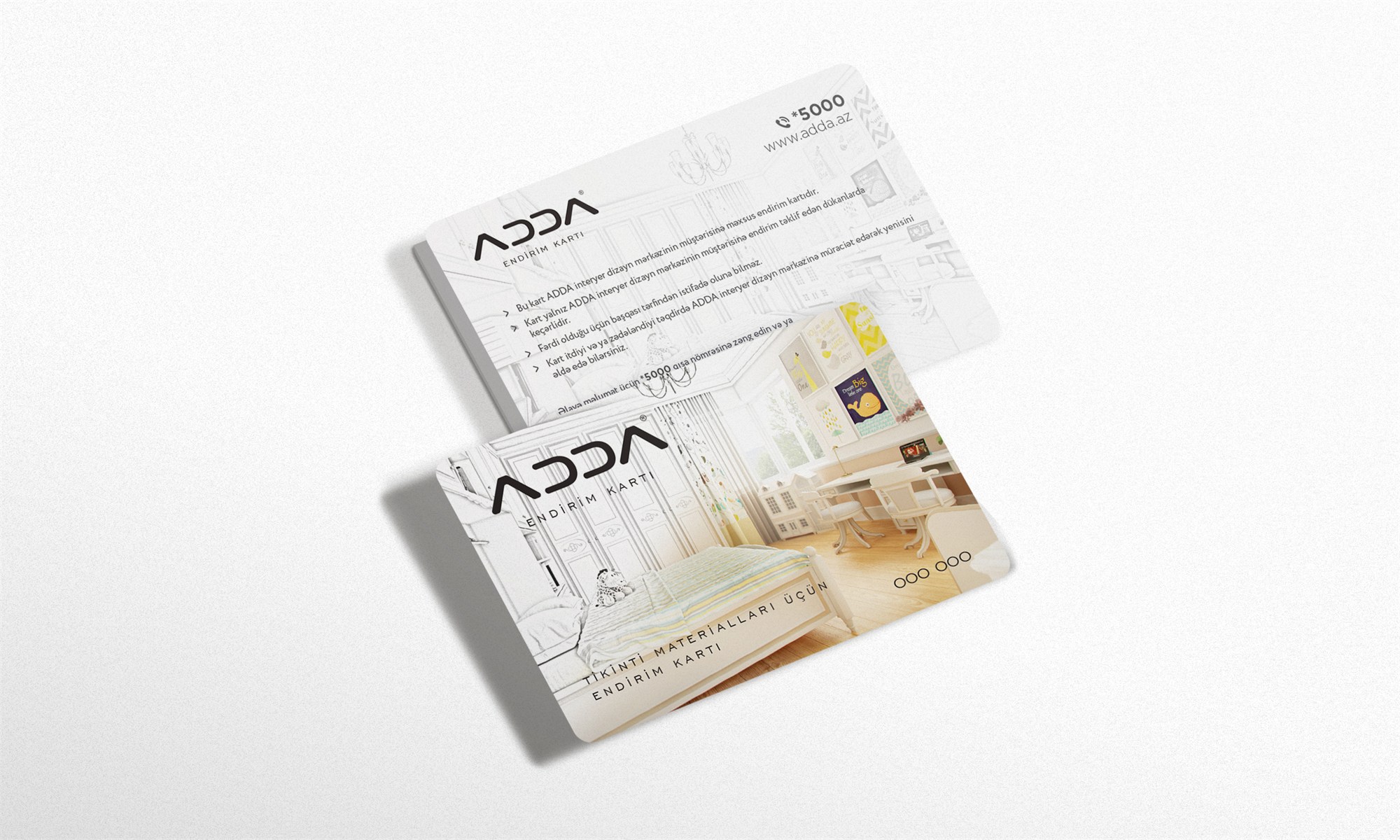
ADDA Kart
Additional value.
Real savings.
Clients who bought an ADDA design received access to partner discounts on furniture, construction materials and finishing products, in a cross-brand programme with leading suppliers. The idea was simple: the money spent on professional design would be partly recovered through savings during the renovation itself. In some scenarios, the discounts could almost offset the cost of the design.
Design stopped being an extra expense. It could help bring the cost of the renovation down.
not launched.The concept and mechanics were developed and built into the campaign, but the client did not have time to roll the programme out.
The Logic
From advertising
to the offer itself.
The project did not stop at making ads. Research identified the barriers. The first campaign solved the problem of attention. “Like it first, buy it after” solved the problem of trust. ADDA Kart addressed the perceived cost. Each step answered a different reason not to buy.
The Result
From unknown
to talked about.
ADDA started as a strong studio the market barely noticed. Instead of copying the competitors, we first found out why people were not choosing it. Then we went through the barriers one by one.
Clients started to come.
We didn’t start with the advertising.
We started with why people weren’t buying.